Lobby signage is one of the elements that most strongly influences the entrance experience of a building.
Within just a few seconds, visitors decide whether they feel confident in the space,
whether they understand where to go, and whether the environment conveys order and professionalism.
That’s why lobby signage is not just a design feature it is a primary operational tool.
Lobby Signage as a Complete System
To choose the right solution, it’s important to think of lobby signage as a complete system rather than individual pieces.
Every lobby should include three basic layers: identification, direction, and information.
Identification confirms arrival; directional signage guides visitors to reception, elevators, or exits; and supporting information such as a tenant directory clarifies who is located where.
When these three layers work together, the lobby feels intuitive without becoming overloaded with signs.
Identification Signs: Creating Immediate Confidence
The primary identification sign anchors any lobby signage system.
It immediately reassures visitors that they’ve arrived at the correct destination.
This sign typically displays the building or company name sometimes as dimensional letters,
sometimes as a clean wall-mounted solution in aluminum or acrylic, and occasionally enhanced with lighting for stronger visibility.
The goal is not more text, but clarity and precision.
The sign should integrate seamlessly with the architecture while remaining unmistakably visible.
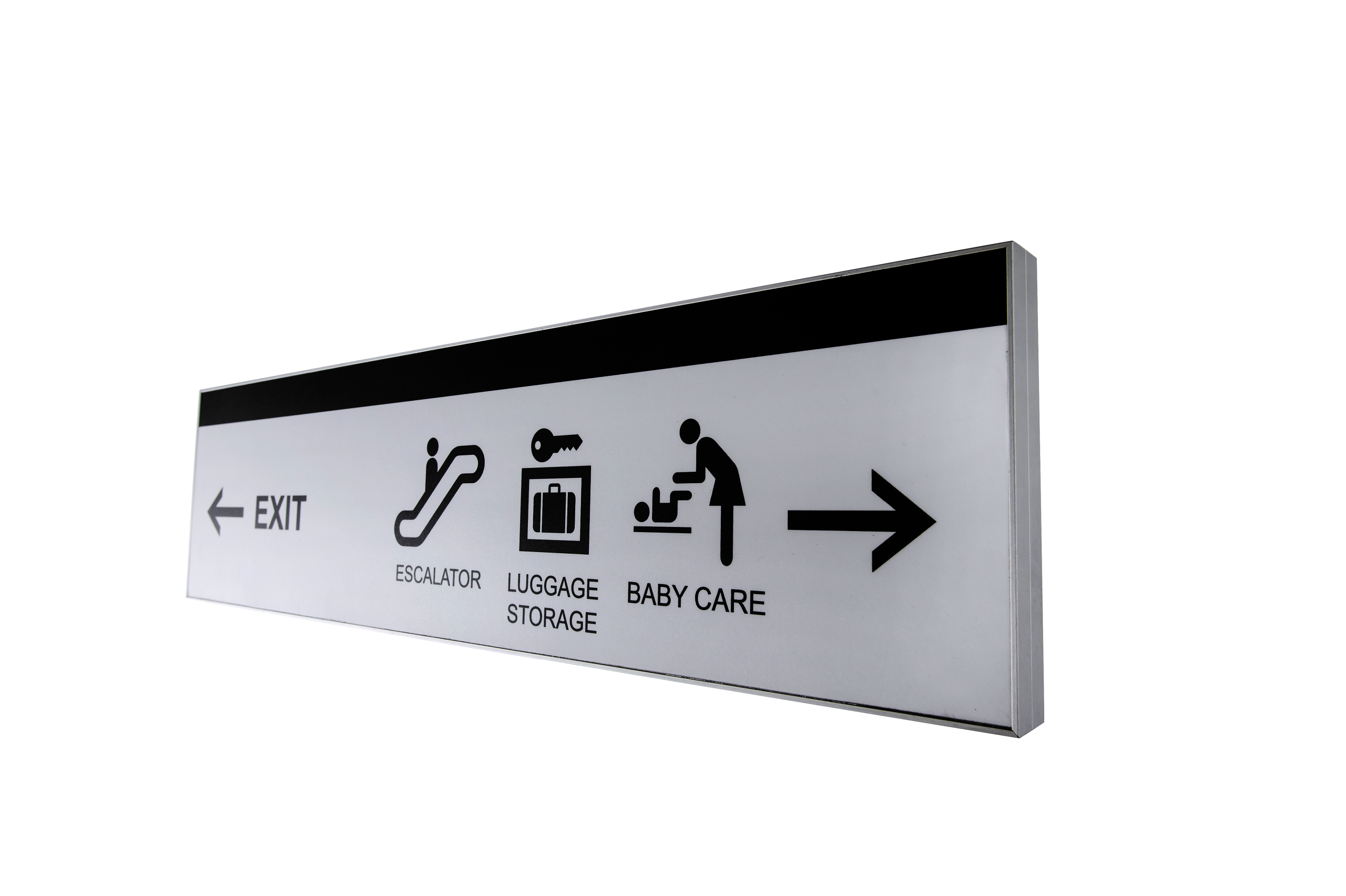
Directional Lobby Signage: Short, Clear, and Well-Placed
After identification comes direction.
One of the most important principles in lobby signage planning is simplicity: short and clear.
People move through lobbies they do not stop to read long explanations.
“Elevators →” works better than a full sentence.
The same applies to “Reception ←” or “Exit ↑.”
A clear destination and a strong arrow create immediate understanding.
Placement is equally critical.
Directional signage must appear before decision points before a corridor splits or before visitors choose a path not after.
Even a beautifully designed sign fails if installed too high, hidden behind a column, or positioned beyond the junction.
Tenant Directories in Lobby Signage
In office buildings, the tenant directory is often one of the most significant lobby signage components.
The choice typically comes down to static versus digital.
Static directories suit buildings with stable tenant lists and a preference for a clean, classic look.
Digital directories support frequent changes, announcements, and dynamic content.
Regardless of format, structure matters most: floor first, then company name, clear typography, and placement along the natural path to the elevators.
Overcrowded directories with small text create confusion instead of clarity.
Keeping the Lobby Clean and Professional
One of the biggest challenges in lobby signage design is maintaining a premium look without visual clutter.
The solution is simple: one sign, one purpose.
Identification signs should not double as directional signage.
Directional signs should not function as directories.
Separating functions reduces the number of signs while increasing clarity.
A consistent graphic language unified fonts, arrows, and icon systems reinforces order and professionalism.
Accessibility in Lobby Signage
Accessibility must be part of the lobby signage plan from the beginning.
Proper mounting height, strong contrast, and clear legibility ensure everyone can navigate the space confidently.
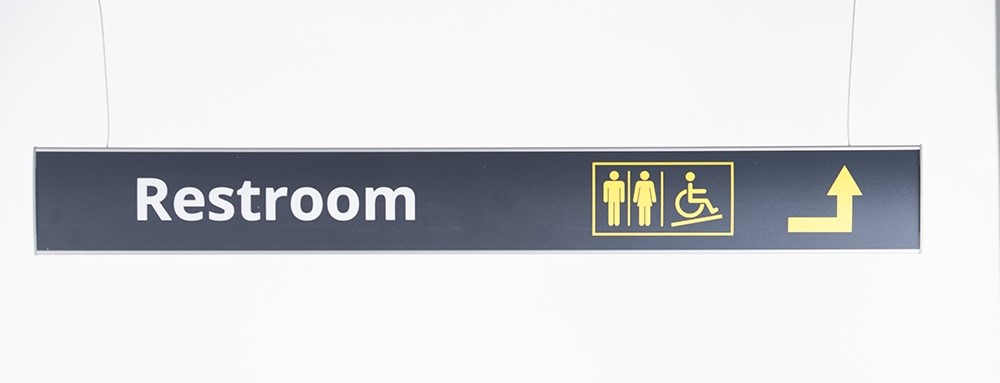
When needed, clearly mark accessible elevators and restrooms within the same visual language.
Integrating accessibility early keeps the system cohesive and intentional.
Planning an Effective Lobby Signage System
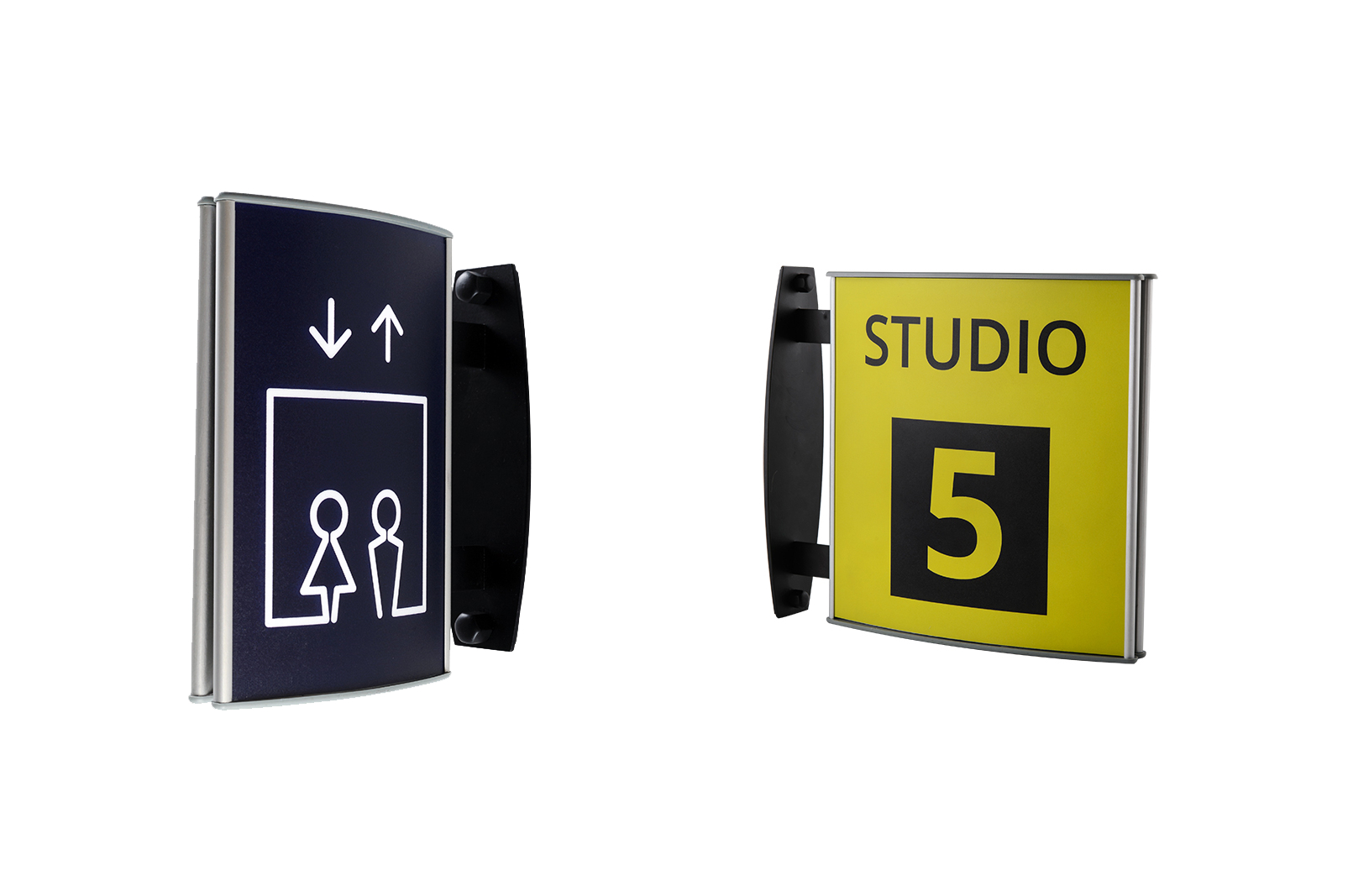
Start with a structured list: primary identification, directional signage to key destinations,
a directory if required, and supporting signs such as restrooms or exits.
Then define a unified design language, choose materials that complement the interior,
and map placements directly on the floor plan.
Early planning prevents costly last-minute changes and ensures the final result is both visually strong and fully functional.
Want to see real examples and options?
Explore our signage solutions for lobbies and entrances.
Ultimately, successful lobby signage is almost invisible because it works.
Visitors enter, understand, and move forward without hesitation.
The lobby feels organized, clear, and professional.
When that happens, you know the system was designed correctly.